


Surviving and Thriving at Main Camp: Physical Preparation Meets Opportunity

Hockey Horizons Staff Writer | Fitness Kits
The information in this article is for general educational purposes only. The author is not a certified personal trainer or strength and conditioning specialist. Always consult a qualified fitness professional or sports medicine provider before beginning or modifying a training program, particularly if you have any existing injuries or health concerns.
Main camp is here or within days. Everything you've done since April exists to give you the best possible opportunity in this environment. Now the question shifts from how to build fitness to how to perform at your best, stay healthy through multiple sessions over multiple days, and make the physical impression that influences roster decisions.
Camp fitness is different from single-game fitness. Camp involves multiple on-ice sessions per day, sometimes with limited recovery time between them. Players who are fit in a single-session way but lack the recovery capacity to perform in session three or four as well as session one are at a disadvantage compared to players whose conditioning allows them to maintain effort and quality across a full day of camp. This recovery capacity is built over the summer through the aerobic conditioning work we've discussed — the player with the strong aerobic base recovers between sessions faster than the player who relied solely on skating and strength work.
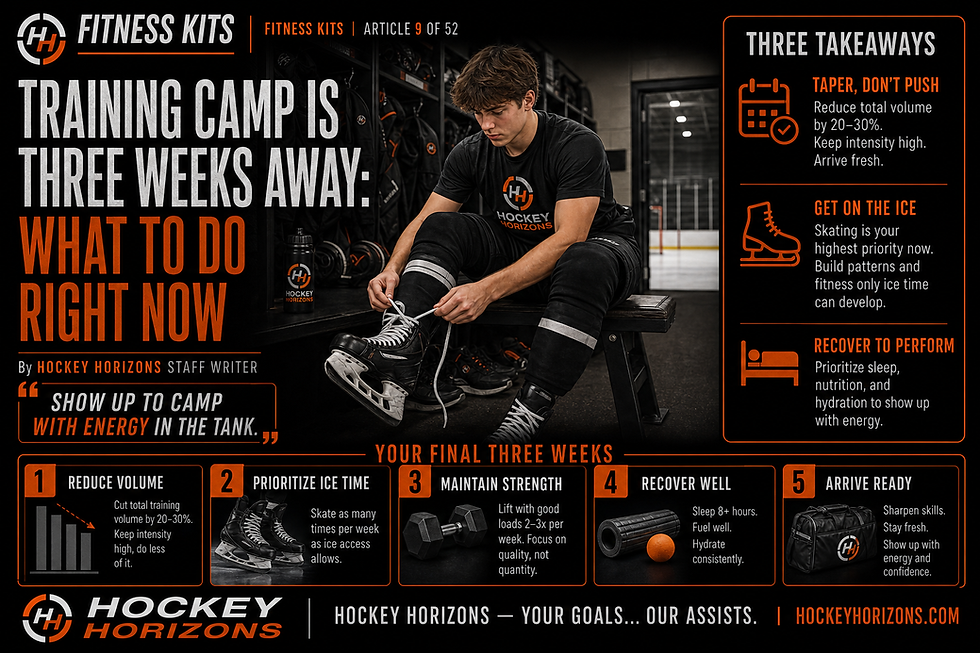
Physically, camp is a stress event — your body is being asked to do more than it was doing in any single training day over the summer. The response to that stress is inflammation and fatigue that accumulates day by day. Managing that accumulation proactively — through sleep, nutrition, hydration, and basic recovery practices — is how you stay sharp through the final days of camp when many players are fading.
The Physical Details That Matter at Camp
Sleep as much as possible — eight to nine hours if you can get it, with a consistent schedule rather than wildly varying bedtimes. Eat immediately after every session — the recovery meal discussed in Nutrition Bits is even more important during camp than during normal training weeks. Hydrate aggressively throughout the day. Perform brief mobility work before every session and static stretching after. Take ice baths or cold showers if available — there is reasonable evidence that cold water immersion reduces acute muscle soreness and helps clear metabolic waste products from hard sessions. Do everything the other players aren't doing and you'll be standing taller on the final day of camp.
At Hockey Horizons, we believe that physical preparation is one of the most controllable variables in a player's development. The work you put in away from the rink is reflected in every shift you take on the ice.
For guidance on the complete development picture, visit us at hockeyhorizons.com.


Comments